Risk Management Software
Risks are short- to mid-term threats that could disrupt or affect your business. Through identifying, monitoring and lowering their impact through appropriate measures, their damage can be eliminated or significantly reduced.
Benefits of Trend Management Software for Companies
Early Risk Detection Through AI-Powered Analysis
Modern risk management software uses artificial intelligence (AI) to automatically analyze data patterns, market movements, and external signals. This enables potential risks to be identified early and preventive measures to be implemented before they become business-critical.
Decision-Making Processes Supported by Artificial Intelligence
By leveraging artificial intelligence, decision-making processes become data-driven, transparent, and efficient. Risk reports that clearly visualize complex relationships and highlight relevant developments at an early stage provide leaders with clear, objective foundations for decisions, allowing them to set priorities deliberately and confidently—rather than relying on assumptions.
Enhanced Transparency Through Real-Time Monitoring
Stronger Resilience Through Connected Data Analysis
By integrating business intelligence and market intelligence, the software connects internal and external data sources. AI agents identify dependencies and interactions between risks to develop more precise scenarios and actionable options.
Enhanced Data Security and Compliance
With integrated data security and cybersecurity features, the software protects sensitive company and risk data from unauthorized access. AI-based monitoring mechanisms ensure that security policies are followed and compliance requirements are automatically verified.
Our Risk Heat approach
-
40PreventDetermine risk profiles for identification.
-
30ReduceEvaluate risks and their impacts.
-
20Lay-offCounter measure and define strategies.
-
10AcceptMonitor risk for early warning detection.
What is Risk Management?
Risk management refers to the systematic identification, assessment, and control of threats that may impair business processes in the short and medium term.
In an environment shaped by VUCA – volatility, uncertainty, complexity, and ambiguity – risk management faces new challenges. Crises such as the financial crisis have shown that traditional forecasts are insufficient. The risk management process therefore needs to be more strongly oriented toward long-term perspectives and flexible responsiveness.
Rethinking Risk Management: AI-Driven Intelligence for a Resilient Future
In a world defined by volatility, uncertainty, complexity, and ambiguity, organizations require a modern, technology-based approach to risk management. Traditional methods are reaching their limits — today, data, interconnected analytics, and AI-enabled decision processes increasingly determine an organization’s ability to act.
With AI-driven intelligence, integrated market intelligence, collaborative work environments, and AI-based future intelligence, our approach enables proactive risk control — before risks turn into crises.
What Is Modern Risk Management?
Modern risk management goes far beyond reacting to problems — it is about identifying risks at an early stage and managing them in a targeted way. Through structured risk assessment, potential threats are analyzed and prioritized to support well-informed decision-making.
A risk early-warning system helps organizations continuously monitor critical risk indicators and respond to changes in real time. This approach becomes particularly effective when it is grounded in expert knowledge and professional assessments: through exchange between departments, collaborative evaluations, and the integration of experience-based insights, a holistic understanding of complex risk interdependencies emerges.
This enables organizations to classify and control technological, market-related, and organizational risks with greater precision. The goal is to reduce uncertainty and sustainably strengthen the organization’s resilience against future challenges.
Key aspects of modern risk management include:
- Risks are dynamic and systemic
- Data volumes are growing exponentially
- Global interdependencies require real-time transparency
- Prevention arises from learning systems and human–machine collaboration
Future-Ready Risk Management therefore means:
- Feeding data into AI systems to enable faster responsiveness
- Using AI to detect emerging risk developments more quickly
- AI-supported pattern recognition to identify new risks
- Automated risk detection based on media and data streams
- Interactive dashboards for sharing results
- Aggregating diverse data sources on a single platform

The Challenges of Risk Management
Companies and public institutions operate in an increasingly complex and volatile environment in which risks are constantly evolving, new ones emerge, and existing ones shift in their impact.
In this dynamic landscape, the challenge of risk management lies not only in identifying risks but also in assessing, mitigating, and strategically leveraging them — including the opportunities they contain.
Modern risk management software offers valuable support, but it can only be as effective as the quality of the data and the ability to interpret it intelligently. Topics such as data security, cybersecurity, and future AI are becoming increasingly important, as they introduce both new protective mechanisms and new risk factors.
Our approach comprises several phases that reveal the strategic vulnerability and interdependencies of individual risks — taking into account their specific characteristics and systemic relationships:
Multilayered architecture – Risks and opportunities should be examined from different perspectives, such as economic, technological, social, and environmental. Only through multidimensional analysis can dependencies be uncovered and scenarios be evaluated in a sound way.
Constant movement – Risks continuously evolve. Without ongoing monitoring and up-to-date data, any risk management approach loses its relevance. Real-time data, smart analytical tools, and adaptive algorithms — such as those from the field of Future AI — enable dynamic adjustments and faster responses to change.
Interdependencies – Risks rarely exist in isolation. They influence one another and are strongly shaped by external factors, global events, and alternative future scenarios. Robust risk management must therefore identify interconnectedness and anticipate potential chain reactions at an early stage.
Technological vulnerability – With increasing digitalization, data security and cybersecurity become critical. Lacking security strategies can become risks in themselves, causing both operational and reputational damage.
Human factor and mitigation – Even the best software cannot replace human judgment. What matters is how organizations communicate, prioritize, and implement measures to manage risks. Training, accountability, and transparency remain central success factors.
The Foresight Strategy Cockpit: AI-Powered Risk Intelligence
The Foresight Strategy Cockpit (FSC) combines extensive data sources with expert knowledge in a collaborative platform to identify, assess, and manage risks holistically. Through the integrated indicator and risk database and the connected media analytics, developments are monitored in real time, making AI-based risk signals visible at an early stage.
Key features of the FSC Risk Module:
- Combined business intelligence & market intelligence
- Real-time AI monitoring and automatic risk signals
- AI-supported indicator database
- Media analytics & sentiment evaluation
- Forecasting algorithms & scenario models
- Export-ready reports & presentations at the click of a button
By intelligently linking these functions, the platform becomes a powerful tool for early risk detection and assessment. The system uses artificial intelligence to analyze complex data volumes, detect trends, and automatically update relevant risk indicators. In this way, the FSC helps organizations reduce uncertainty, make well-informed decisions, and strengthen their strategic resilience over the long term.
Collaborative Risk Management
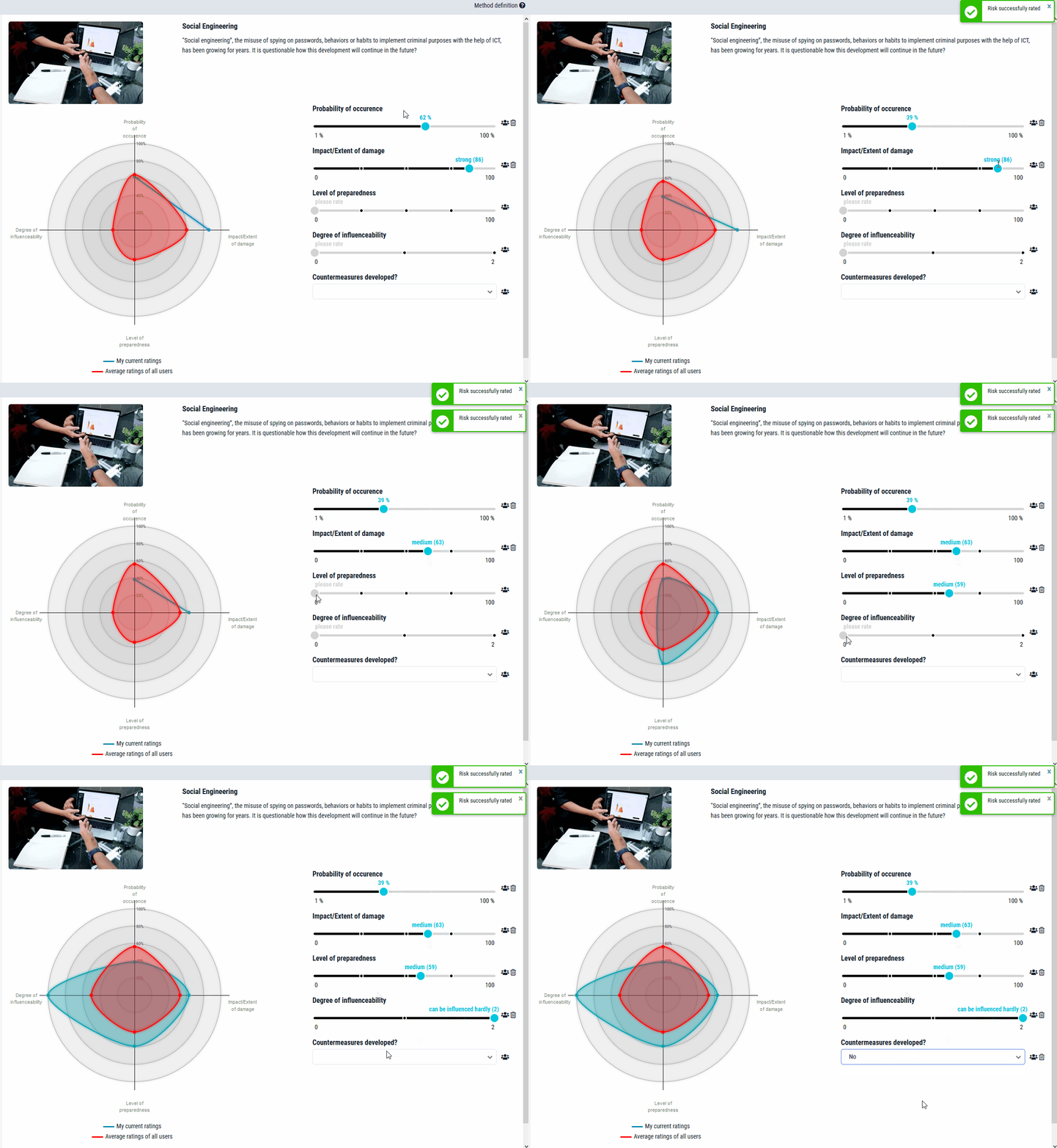
With the Foresight Strategy Cockpit (FSC), coordination efforts in risk management are significantly reduced. Instead of relying on multiple programs or isolated processes, the platform consolidates all relevant functions of risk management software into a shared working environment. This allows employees, teams, and departments to efficiently merge their insights and use available resources more strategically. The result is a seamless, collaborative process that creates transparency and substantially increases the value of teamwork.
By holistically integrating internal information, external expert knowledge, and data-driven analytics, the FSC supports all phases of the risk management process — from risk identification and assessment to risk strategy and action planning. Risks are not viewed in isolation but analyzed in the context of their strategic relevance and potential risk scenarios. This enables well-founded prioritization and the development of targeted response options.
At the same time, the system provides automated functions for risk reporting. All identified risks, analyses, and actions can be exported and shared as clear, structured reports at the push of a button.
Overall, collaborative risk management in the FSC fosters a shared understanding of risks across the entire organization. It creates a platform where knowledge, responsibility, and strategy converge — enabling more efficient, forward-looking, and resilient risk management.
Early crisis detection
Change is a constant companion in our daily lives – for individuals as well as for organizations. Not all factors can be controlled, but targeted risk management allows organizations to significantly strengthen their resilience. Modern risk management tools help companies systematically identify risks, assess them, and implement appropriate measures to minimize them.
With AI-powered risk early warning systems, potential threats can be detected at an early stage, before they become critical to business operations.
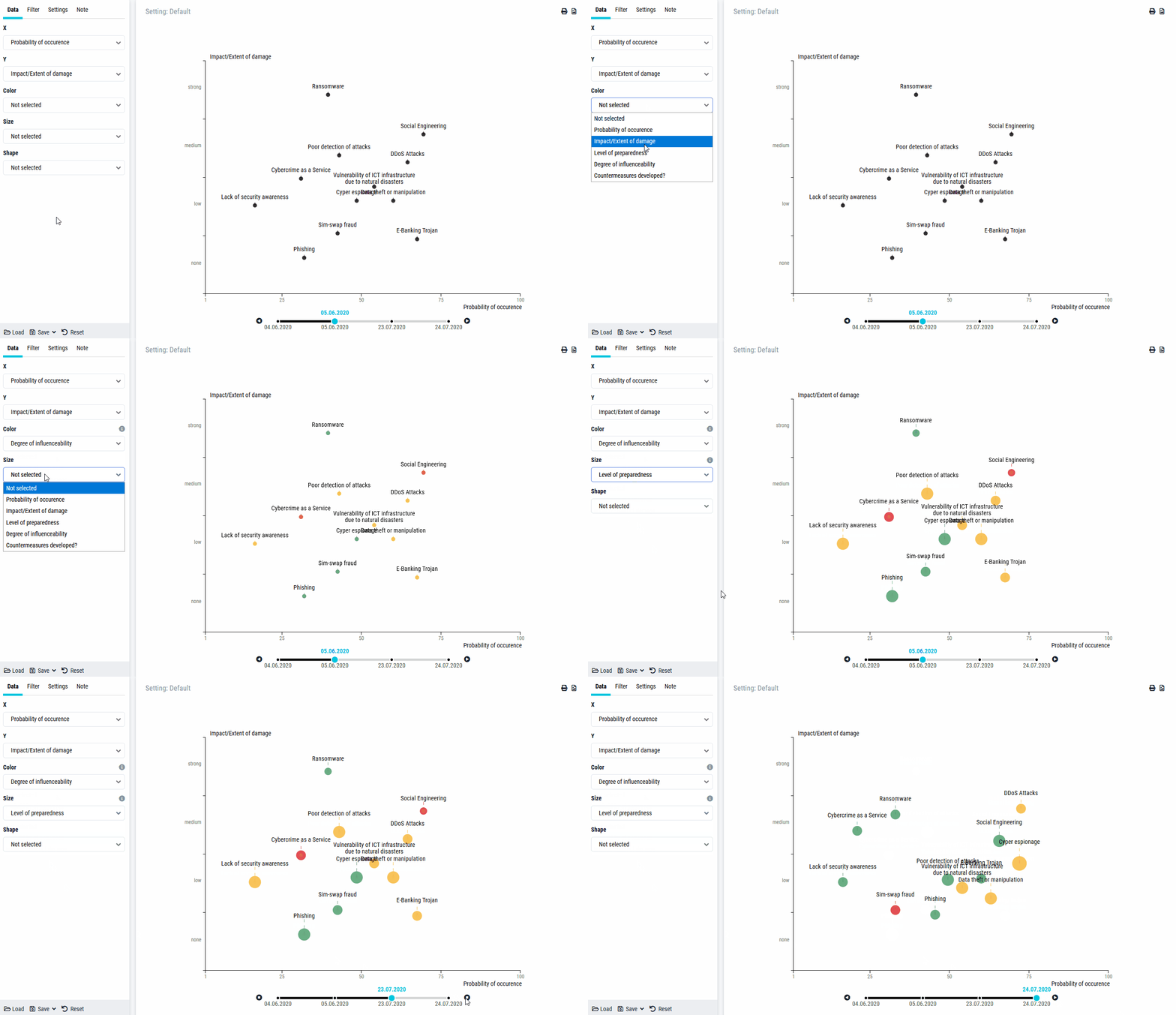
Professional risk management creates transparency and fosters a corporate culture in which risks are not ignored but actively managed. The likelihood of occurrence and potential impact determine the severity of each threat and the strategies required to mitigate or accept it.
AI-based systems make it possible to analyze these factors in a data-driven way and monitor them continuously – enabling proactive, forward-looking risk management.
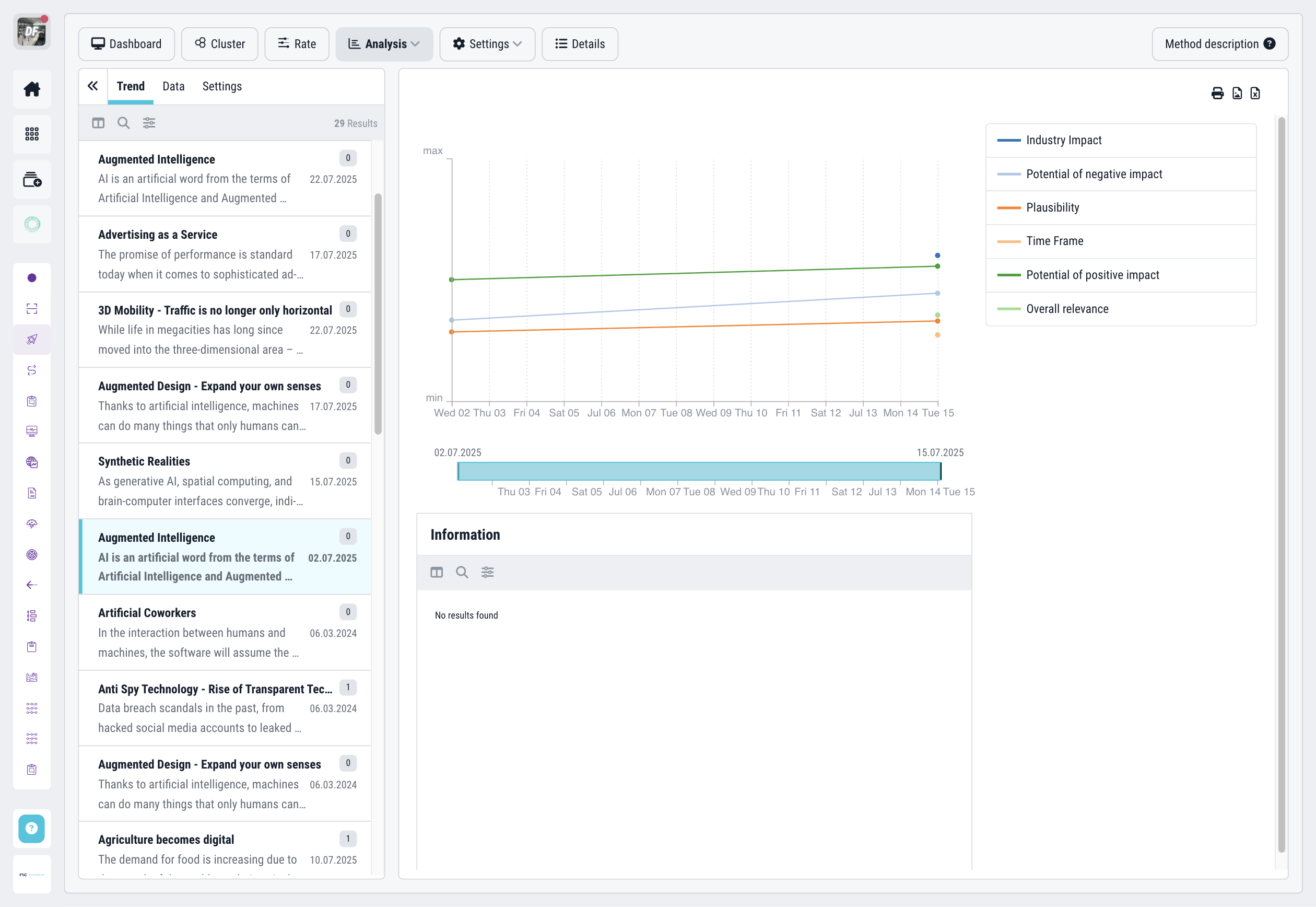
Our values in short
-
Collaborative Risk Management
-
Browser add-on and mobile app for faster integration of relevant information
-
Real-time risk monitoring
-
Automated reporting features for rapid communication (risk reports)
-
Comprehensive support and training by our foresight experts
-
AI agents for intelligent analysis, prioritization, and assistance in risk identification and decision-making

FSC Modules
Through strategic foresight methods such as Trend Management and Scenario Construction, we can reduce the complexity and uncertainty of a rapidly changing globalized world.
Designed for your team to create futures
Summary
Change is a constant companion in everyday life—for individuals as well as for organizations. While not all factors can be controlled, targeted risk management enables organizations to significantly strengthen their resilience. Modern risk management tools support companies in systematically identifying risks, assessing their impact, and implementing appropriate measures to mitigate them.
With the help of AI-powered early risk detection, potential threats can be identified at an early stage—before they become critical to the business.
Professional risk management creates transparency and fosters a corporate culture in which risks are not ignored, but actively managed. The likelihood of occurrence and the potential extent of damage determine the severity of each risk and the strategies required for mitigation or acceptance.
AI-based systems make it possible to analyze these factors in a data-driven manner and monitor them continuously—enabling proactive, future-oriented risk management.
Providing an Overview
For every identified risk, clear measures, methods, and processes must be defined. Their consistent implementation determines whether damages can be avoided or at least minimized in critical situations. Modern risk management tools support the central collection and continuous evaluation of all relevant information.
A powerful instrument for this purpose is the Foresight Strategy Cockpit (FSC). It provides an intuitive dashboard that combines AI-driven analyses with visual risk overviews. This gives risk managers and project teams real-time insights into potential threats and available courses of action.
By integrating expert insights with business intelligence early warning capabilities, the system enables faster responses to changes and contributes to long-term risk reduction and organizational stability.
Frequently asked questions and answers
A risk management software solution helps companies identify, analyze, assess, and monitor potential risks. This enables you to manage various types of risks, including financial, strategic, and operational risks. Our Foresight Strategy Cockpit (FSC) serves as a reliable risk management software by helping you detect, monitor, and manage risks. This allows your organization to respond quickly to changes and, ideally, avoid risks altogether.
In an increasingly interconnected and data-driven business environment, risks emerge dynamically and often unexpectedly — ranging from economic fluctuations and regulatory changes to technological disruptions. An AI-supported risk management software such as the Foresight Strategy Cockpit (FSC) detects these developments at an early stage, analyzes large volumes of data in real time, and helps companies assess risks more accurately while proactively initiating appropriate countermeasures.
The FSC combines data and expert knowledge in a collaborative environment to manage every risk scenario. It includes an indicator and risk database as well as access to media analysis to monitor developments in real-time. This provides companies with the opportunity to react agilely and proactively to changes.
Traditional risk management methods often rely on manual processes and are time-consuming. Modern risk management software automates many of these processes, provides real-time information, and facilitates collaborative work. As a result, risks can be identified more quickly, and necessary measures can be implemented more efficiently.
A holistic risk management approach, supported by corporate leadership, helps identify risks and uncover potential threats. The risk management process is a clearly defined method for understanding which opportunities and risks exist, how they might affect a project or an organization along with its business objectives, and which actions can be taken in response.
Risks that may potentially occur can be clustered into different categories. These include corporate risks, operational risks, financial risks, and compliance risks. Reputational risks or project-related risks can also cause immense damage and even jeopardize the future of the company. Additionally, vulnerabilities can serve as entry points for malicious software.
Assessing risks is essential for companies and their management teams to evaluate the safety of their projects, processes, facilities, and strategies. Only those who understand the likelihood of occurrence and implement measures that support the identification and management of risks can achieve a promising outlook.
Risks can never be completely avoided, but when properly assessed, their impact can be minimized and damage can be prevented in critical situations. This depends above all on a holistic identification of risks and an understanding of how individual factors are interconnected. Those who identify potential threats can provide their organization with better opportunities and a more sustainable long-term perspective.